Blog
Guides for people who ship.
How the platform works, why it's built the way it is, and how to get the most out of it — written to be useful, not hype.
About this blog
A working library, not a feed
Every piece here is long-form, mechanism-first, and written to still be true in six months.
Most product blogs are announcements wearing the costume of articles. This one is built the other way round. Each guide takes a single question that matters when you are actually trying to ship something — how do I describe what I want, what is safe to let an agent do to my codebase, what breaks after launch and who notices first — and answers it at the length the question deserves.
It is written for two readers who rarely share a bookshelf. The first has an idea and no intention of learning to code: a founder, an operator, a shop owner who needs a booking page that actually saves bookings. The second is a working engineer deciding how much rope to give an AI agent inside a repository that already has users. The guides are labelled by track so you can tell which is which before you commit to a scroll.
The rules we write under are simple. No invented customers, no invented metrics, no benchmarks that cannot be reproduced. Where a capability sits behind a paid plan, the guide says so. Where the product does something narrower than the industry phrase for it, the guide describes what it actually does instead of borrowing the phrase. That is less exciting and considerably more useful.
Nothing here requires an account to read. If you want the shorter, click-by-click version of any of it, the documentation is the companion volume — most guides link across to it at the end, and the section anchors are on the cards further down this page.
Latest
Reading list
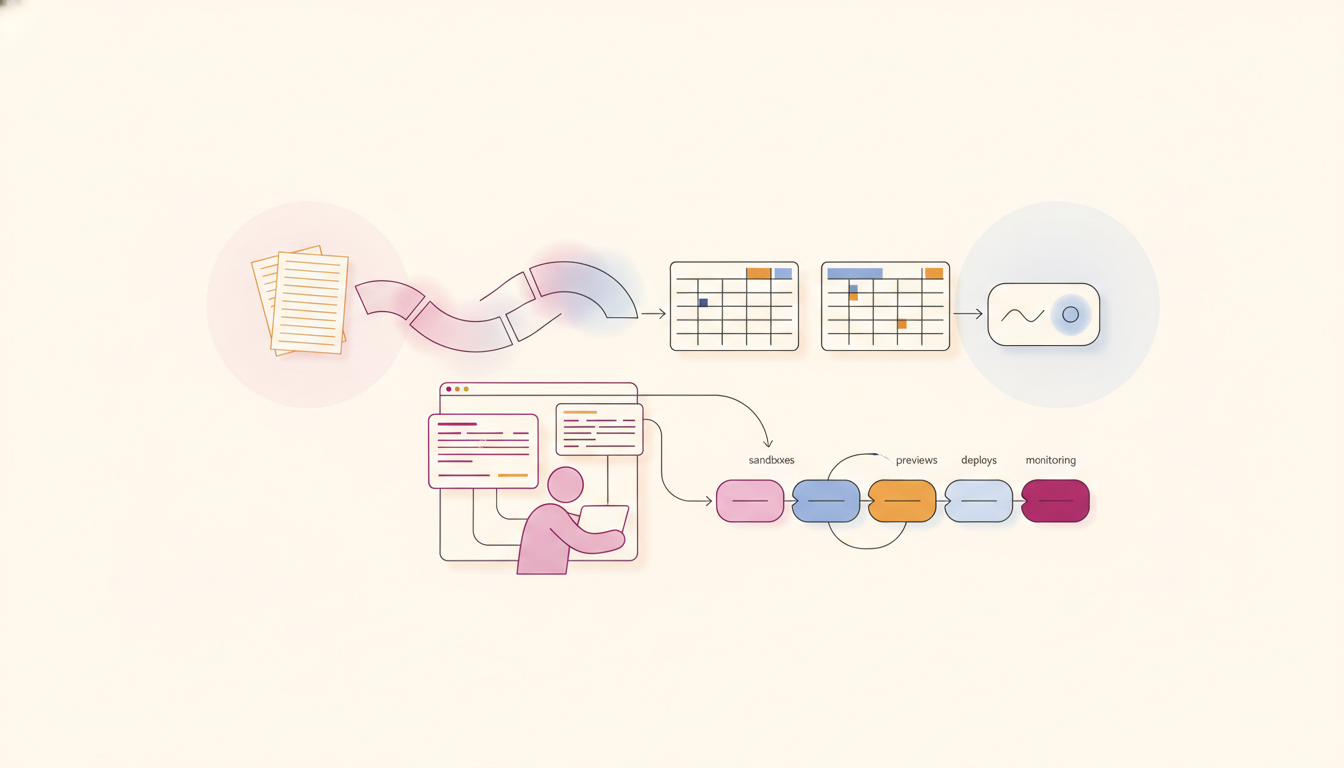 Guide
GuideBeyond Prototypes: Building Production-Ready AI Apps with Managed Backends
Learn how to build production-ready AI apps with a managed backend for AI apps. We cover Postgres, auth, payments, and security for 2026.
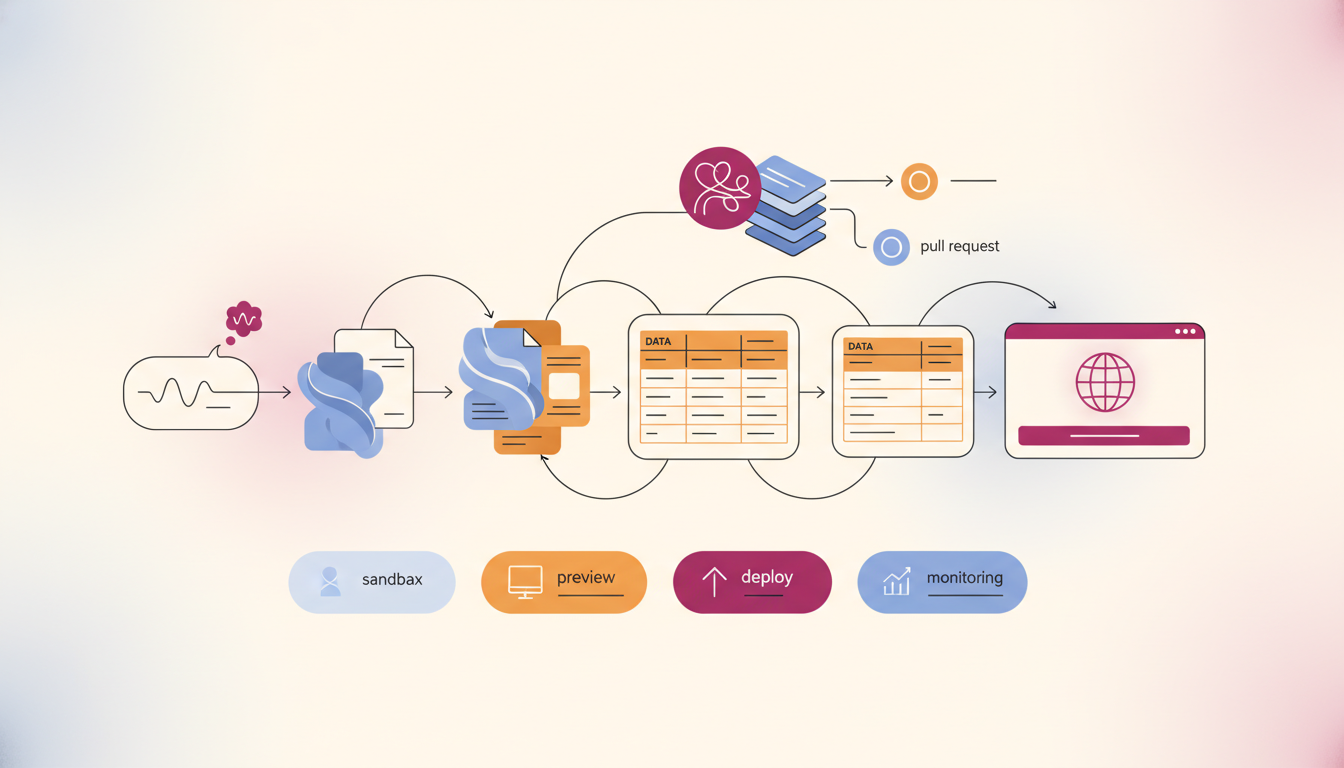 Guide
GuideAI App Builder Pricing 2026: A Founder's Guide to Cost-Effective Development
AI app builder pricing 2026 varies by model. Learn subscription vs. usage costs, hidden fees, and budgeting for your MVP without overspending.
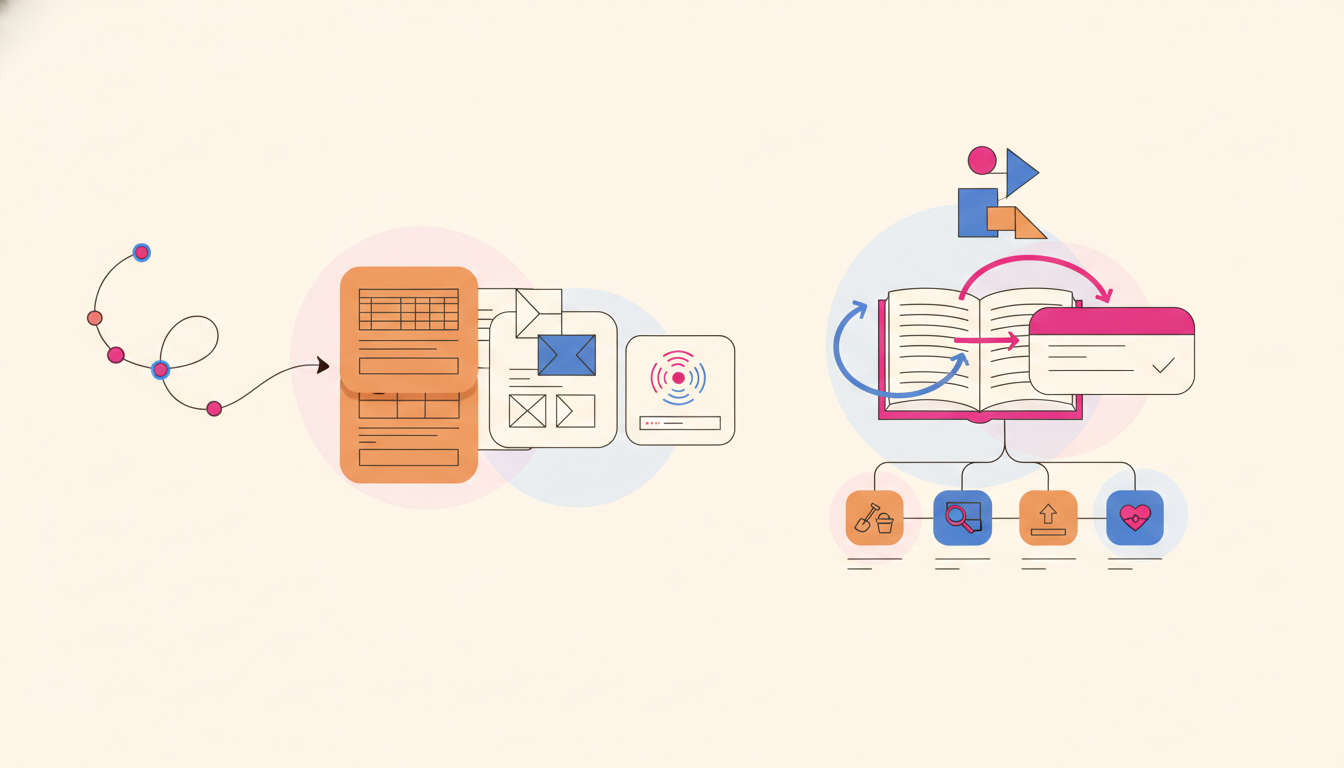 Guide
GuideAI App Builders for Founders: Ship a Production-Ready App (Not Just a Prototype)
Discover how to use an AI app builder for founders to ship production-ready apps. We compare features, costs, and code ownership in 2026.
Why Your Imported Repo Will Not Run: A Practical Guide to Environment Variables and Secrets
A clone brings your code. It does not bring your credentials, and it never should. Here is what to do about that.
How to Write a Prompt That Builds the Right App the First Time
You are not programming. You are briefing. Briefs have a shape, and getting that shape right is the highest-leverage thing a non-technical builder can learn.
Shipping Is the Start, Not the Finish: A Guide to Continuous Workspace Monitoring
The day you Go Live is day one of operating a real thing in the world — monitoring is what keeps day two from being a surprise.
What a "Managed Backend" Really Means — the Code Is Written In, the Accounts Stay Yours
The interesting features of your app are rarely the bottleneck. The plumbing underneath them usually is — and the honest fix is vetted code in your own repository, not a black box.
Why an AI Coding Agent Should Only Touch Your Repo Through a Reviewed Pull Request
Autonomy is not the same as access. The safest place for an AI agent to be powerful is inside a pull request you control.
From Prompt to Live Website: How It Actually Works End to End
What really happens between typing a sentence and watching your idea load in a browser — explained for builders who do not write code.
By theme
Three tracks through the library
The same guides, grouped by the job you are trying to do rather than by the day they were written.
Track one
Building from a description
For the reader who does not write code and does not intend to start. These two pieces cover the whole create path — what the machinery is doing between your sentence and a running app, and how to describe an idea so the first build lands close to what you meant. Read the briefing guide first if you have never done this before; read the end-to-end walkthrough first if you want to know what you are looking at.
Capability: prompt to appHow to Write a Prompt That Builds the Right App the First Time
You are not programming. You are briefing. Briefs have a shape, and getting that shape right is the highest-leverage thing a non-technical builder can learn.
From Prompt to Live Website: How It Actually Works End to End
What really happens between typing a sentence and watching your idea load in a browser — explained for builders who do not write code.
Track two
Working inside a real codebase
For engineers pointing an agent at a repository that already has users, history and opinions. The argument for constraining an agent to the reviewed pull request, what has to be true underneath for that pull request to be worth reading, and the credential problem that makes almost every first import look broken when it is not.
Capability: GitHub PR agentWhy an AI Coding Agent Should Only Touch Your Repo Through a Reviewed Pull Request
Autonomy is not the same as access. The safest place for an AI agent to be powerful is inside a pull request you control.
Why Your Imported Repo Will Not Run: A Practical Guide to Environment Variables and Secrets
A clone brings your code. It does not bring your credentials, and it never should. Here is what to do about that.
Track three
Foundations, and life after launch
The parts nobody demos. What a managed backend actually covers and where its edges are, and what operating a launched app consists of — repair before a build ships, a ledger of what exists, a record of what deployed, and the version history you rewind to when a change turns out badly.
Capability: workspace monitoringWhat a "Managed Backend" Really Means — the Code Is Written In, the Accounts Stay Yours
The interesting features of your app are rarely the bottleneck. The plumbing underneath them usually is — and the honest fix is vetted code in your own repository, not a black box.
Shipping Is the Start, Not the Finish: A Guide to Continuous Workspace Monitoring
The day you Go Live is day one of operating a real thing in the world — monitoring is what keeps day two from being a surprise.
Start where you are
What to read first, by situation
Six ways people arrive at this page, and the single guide that answers each one.
I have an idea and no idea how to describe it
How to write a prompt that builds the right app
The five things every brief needs, a worked example taken through three drafts, and the prompt patterns that reliably waste a build.
I want to know what actually happens when I hit build
From prompt to live website, end to end
Scoping chat, blueprint, build quality, sandbox, preview, the backend you never wired, and Go Live — with the surface named at every stage.
I am considering letting an agent near my repository
Why an agent should only ship through a reviewed PR
Capability versus authority, the two indexes that keep diffs small, the three verification gates, and how to review an agent pull request.
I imported a repo and half of it does nothing
Environment variables and secrets, explained
Why a clone never brings your .env, how to recognise the signature of a missing credential, and how to fill them in without leaking anything.
I want to know what "managed backend" is really promising
What a managed backend really means
The four pieces, why the wiring is the slow part, what managed removes — and a plain section on what it does not.
It is live and I am nervous about day two
Shipping is the start, not the finish
The four layers that catch problems at different stages, version history and rewind, progressive rollout, and a routine you can keep.
Blog and docs
Where the guides stop and the docs pick up
The blog explains why the system is shaped the way it is. The documentation tells you exactly where to click. They are meant to be read together.
Prompt-to-live quickstart
The same journey as the walkthrough, compressed into eight steps with what you see and what to do when it does not go to plan.
Open in docsRepo-to-pull-request quickstart
Opening a GitHub project, letting the import finish, filling in secrets, and reviewing the PR that comes back.
Open in docsCore concepts
Project, workspace, sandbox, preview, run, blueprint, build quality, connection, credits — defined once, precisely.
Open in docsEnvironment and secrets
The rules behind the guide: how values are stored, what counts as a secret, and how a pasted .env is parsed.
Open in docsDeploys and domains
Go Live, redeploy, deploy history, and the DNS records a custom domain needs before it goes active.
Open in docsTroubleshooting
The specific symptoms — a preview that will not start, a stale page, a failed build, an empty import — and what to check.
Open in docsKeep exploring
Beyond the guides
The rest of the site covers the same ground from different angles — by building block, by pattern, by industry, and by comparison.
Capabilities
A page per building block: prompt to app, live preview, Go Live, managed backend, code intelligence, sandbox verification and workspace monitoring.
Browse capabilitiesSolutions
Worked patterns from both paths — a bakery landing page, a barbershop booking app, an internal Stripe dashboard, adding dark mode, fixing failing tests, a TypeScript migration.
See the patternsIntegrations
What is wired in for you — Supabase, Stripe, Resend, GitHub, Cloudflare — and what you attach under your own account as a connection.
See what connectsPricing
Which capabilities sit on which plan, how build and runtime credits are counted, and what the same stack would cost assembled by hand.
Compare the plansFAQ
About this blog
Less reading, more shipping.
Describe what you want and watch it build — or connect a repo and ship a reviewed PR.