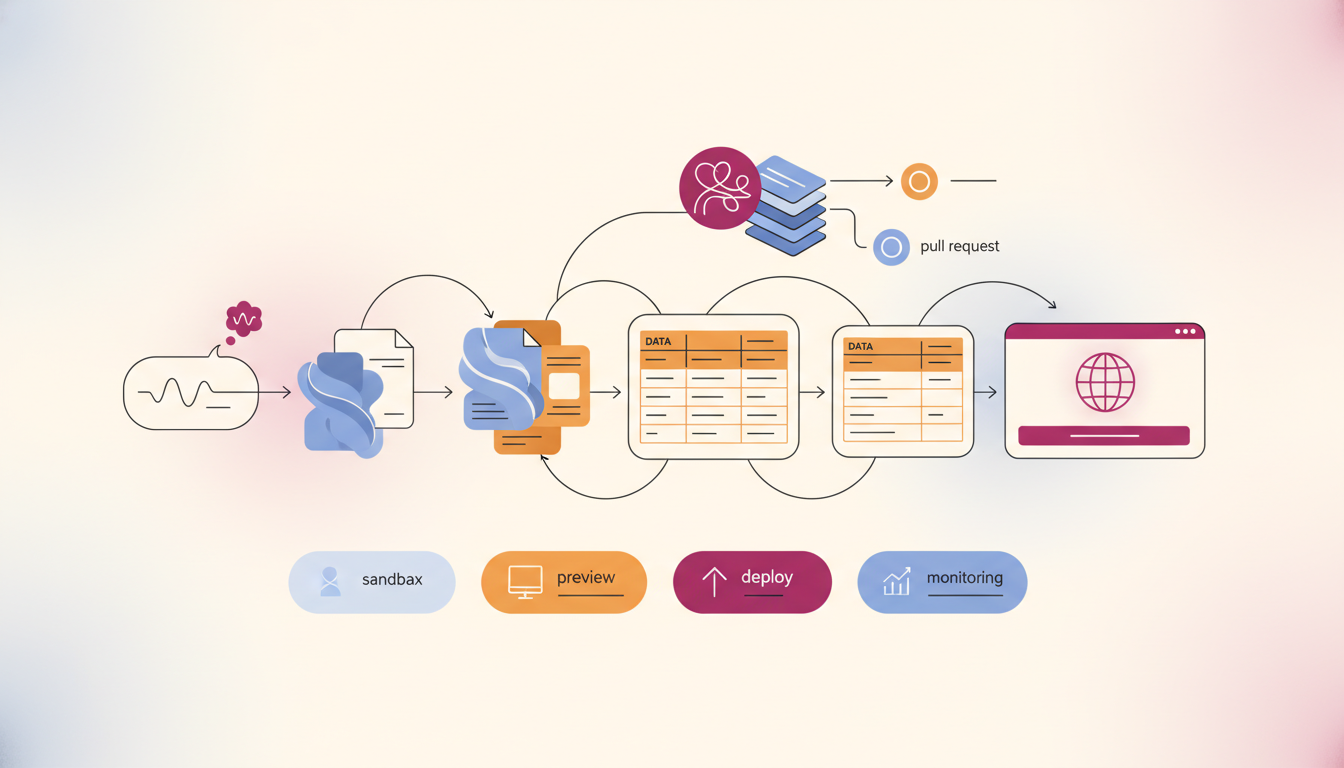
AI app builder pricing in 2026 ranges from free tiers to $50+ monthly subscriptions, plus metered usage fees. The true cost depends on your build frequency and scaling needs, not just the sticker price.
Key takeaways:
- Most platforms pair a monthly fee with usage credits or tokens.
- Hidden costs often include database storage, API calls, and compute time.
- Free tiers typically restrict production deployment and custom domains.
How much does an AI app builder cost in 2026?
In 2026, a usable AI app builder usually costs between $20 and $100 per month for active development. This base price often covers the interface and basic generation capabilities, but it rarely includes the heavy lifting required for production. If you plan to build multiple apps or complex workflows, you will likely hit usage caps quickly.
Founders often underestimate the operational overhead. You are not just paying for the interface; you are paying for the underlying compute that generates code, runs tests, and hosts your application. When you see a $29 plan, assume you will need to upgrade once you connect to real databases or require persistent storage.
I have seen teams try to squeeze an entire MVP onto a basic tier, only to get stuck when the build process consumes too many tokens. The most reliable path is to budget for the tier that allows you to ship your first beta without interruption.
What are the main AI app builder pricing models?
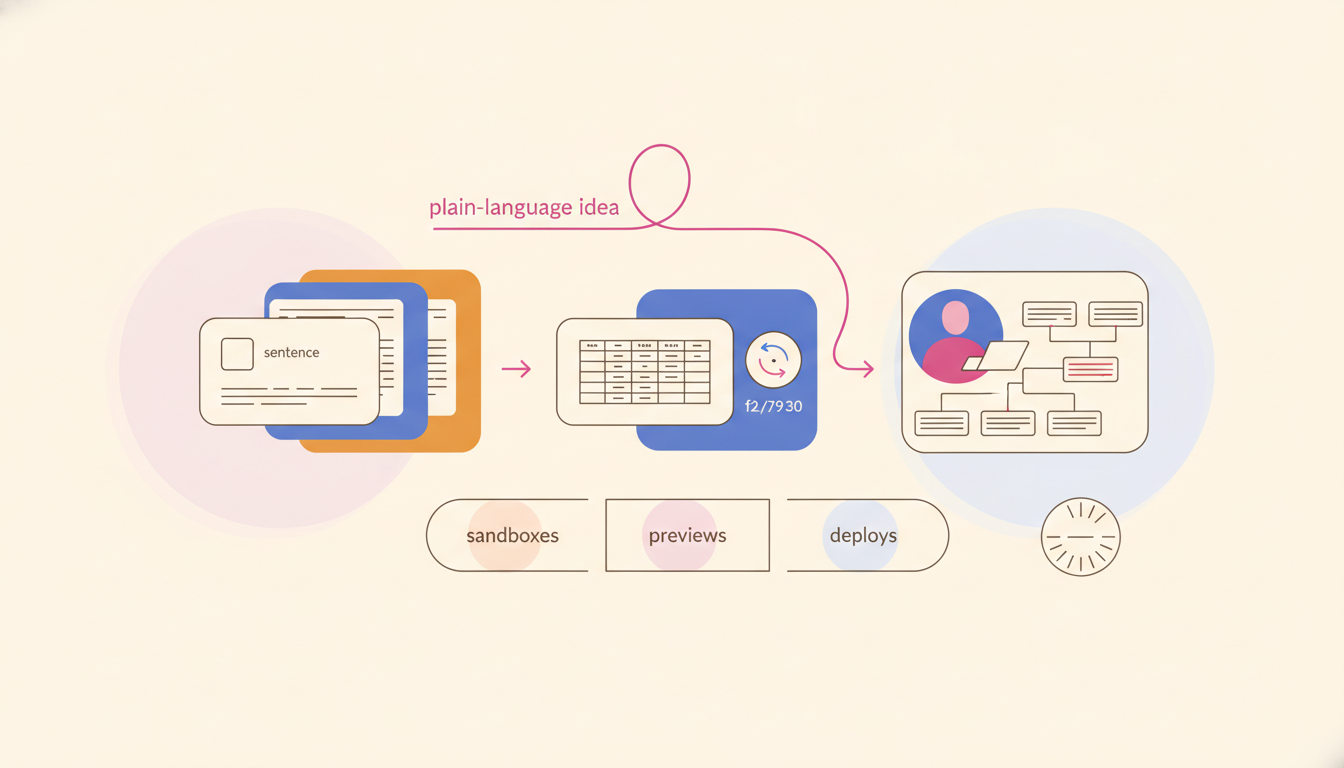
Pricing generally follows two patterns: a flat subscription or a usage-based model where you pay per token, credit, or workload unit.
The most common structure we see in the market today pairs a monthly subscription with metered units. You subscribe to unlock features, but if your app grows, you pay for the extra compute. This means a quiet month is cheap, but a busy month can spike unexpectedly. Newly's breakdown of AI app builder pricing models shows that most tools now operate this way.
| Model Type | Cost Structure | Best For |
|---|---|---|
| Flat Subscription | Fixed monthly fee, unlimited builds | Consistent, heavy users |
| Usage Metered | Base fee + credits/tokens consumed | Occasional builders |
| Pay-Per-Task | Pay only for specific generations | Small, one-off projects |
Subscription models work best if you plan to iterate daily. Usage metered models are safer if you only build occasionally. However, be careful with "unlimited" claims; they often throttle speed or quality after a certain point.
What hidden costs do pricing pages hide?
Hidden costs usually appear when you move from prototyping to production. These include database connections, external API calls, and long-running server tasks.
When you build an app with AI, the tool generates code, but it does not always include the infrastructure to run it forever. You might pay to generate an app, but then pay a separate provider for hosting, database hosting, and authentication. For example, if the builder uses Stripe for payments, you pay the transaction fees. If it uses SendGrid or Resend for emails, those services bill separately.
Zite's analysis of AI app development costs highlights that infrastructure often exceeds the builder cost over time.
- Storage: Generated assets, images, and database rows take up space.
- Compute: Longer generation times require more processing power.
- Connectivity: OAuth providers and API integrations may charge per user.
To avoid this, ask the support team exactly what is included in the "pro" tier. Does it include a database? Does it include the ability to host the front end? If you have to provision these separately, the price jumps significantly.
Which AI app builders are cheapest for startups?
The cheapest option depends on whether you need a prototype or a live product. For prototyping, free tiers are abundant. For live products, look for builders with high monthly limits rather than cheap monthly fees.
Tools like Lovable, Bolt.new, and v0 fall into this category, typically operating on a subscription-plus-usage model. They offer free entry points but charge when you need to export code, deploy to production, or use complex workflows. A startup might find a $0 tier sufficient for three months, but will eventually need a paid plan to support real users.
If you are building a simple internal tool, a no-code solution might be cheaper than a full AI developer. If you are shipping a customer-facing product, plan to spend at least the cost of a part-time intern to get the architecture right. At code-anything, we focus on builders that output real code you can manage, which saves money on long-term maintenance.
Is a free AI app builder plan worth it?
Free plans are useful for testing prompts, but they block most production workflows. They usually come with branded domains, rate limits, and no access to private repositories.
A free tier is valuable when you are deciding if AI fits your workflow. It lets you try a few prompts to see if the output meets your standards. However, relying on it to host your launch is risky. You might find your build blocked mid-process or your app taken down due to usage limits.
If you need to show investors or early users, use a paid tier to get a custom domain. This builds trust and prevents you from losing work when the free trial ends.
How do AI builders compare to hiring freelancers?
AI builders cost less upfront but require technical oversight. Freelancers cost more but handle the full lifecycle, including security and compliance.
A skilled freelancer might charge $5,000 to $20,000 for a complete MVP. An AI builder might cost $500 over six months. The trade-off is speed and quality control. AI generates code quickly, but it may introduce bugs or security issues that a freelancer would catch immediately.
| Comparison | AI Builder | Freelancer / Team |
|---|---|---|
| Upfront Cost | Low ($50–$200/mo) | High ($5k–$20k) |
| Speed | Fast generation, slower debugging | Slower start, faster shipping |
| Control | You manage code and deployment | Vendor manages most delivery |
| Best Use | MVPs, internal tools, prototypes | Complex, compliance-heavy apps |
If you have engineering resources, use AI to accelerate drafts. If you have none, a freelancer may save you money by avoiding expensive rewrites.
How to budget for AI app maintenance and scaling?
Maintenance costs grow as your user base grows. You should budget 15% to 20% of your initial build cost for monthly operations.
When an AI builds your app, it does not patch the security holes that appear later. You need to monitor the build for errors, update dependencies, and manage data backups. This is not always included in the AI builder fee. If you use a managed backend, you pay for the database and authentication service.
Plan for a buffer. If your AI builder bill is $100, expect to spend another $200 on hosting, domain fees, and API costs.
FAQ
What is the average cost to build an app with AI?
Expect to spend $500 to $5,000 over the first year, including subscriptions, hosting, and API fees, depending on complexity.
Is there a completely free AI app builder?
Most tools offer a free tier for prototyping, but production deployment usually requires a paid subscription.
How do Bolt.new and v0 pricing compare?
Both follow a subscription-plus-usage model; check their current pages for specific credit costs and deployment limits.
Does Lovable offer a free tier?
Lovable provides free tiers for testing but charges for advanced features like private exports and team access.
What are the hidden fees in AI app development?
Common hidden fees include database storage, API usage, authentication services, and domain registration.